
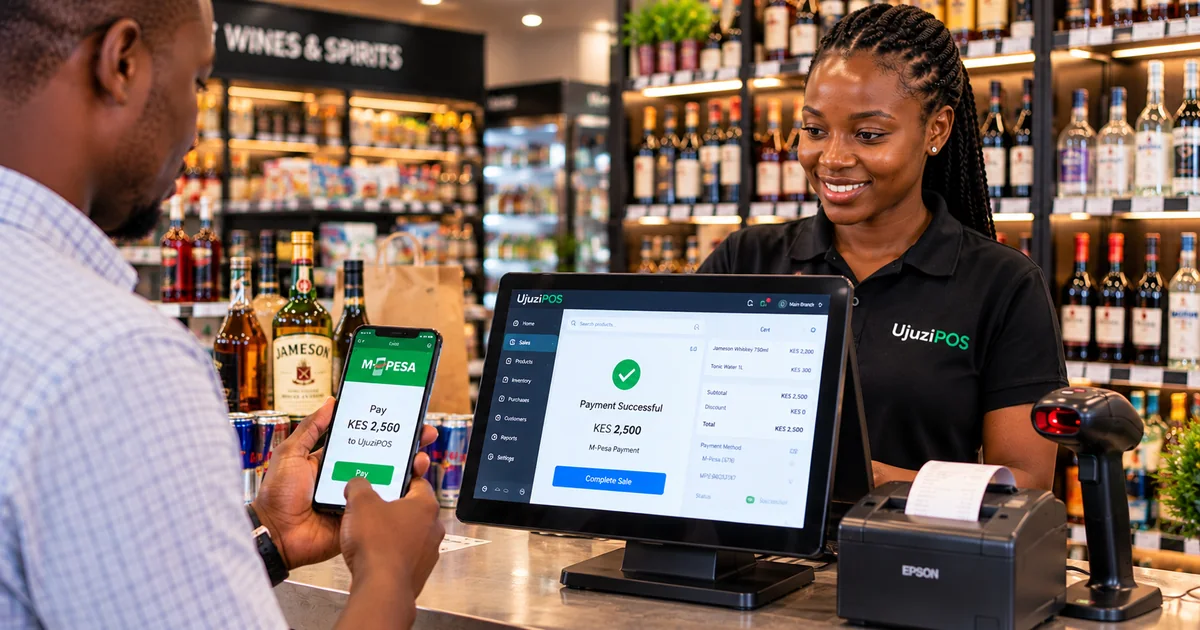
Running a wines and spirits shop in Kenya can be profitable, but managing daily operations isn't always easy.
Between tracking bottles, monitoring cashiers, receiving deliveries and reconciling M-Pesa payments, small mistakes can quickly affect your bottom line.
A good liquor store POS system should do more than record sales. It should help you control stock, improve staff accountability and understand how your business is performing.
Here are six important features to look for when choosing POS software for your liquor store.
1. Accurate Inventory and Bottle Tracking
Missing bottles and inaccurate stock counts are common concerns for liquor retailers.
Imagine starting the day with 24 bottles of Jameson, receiving another 12 and selling 8. Your expected closing stock should be 28 bottles.
A reliable POS should record these movements automatically and make discrepancies easier to investigate.
Look for:
-
Automatic stock deductions after sales.
-
Purchase and stock-receiving records.
-
Low-stock alerts.
-
Stock movement history.
-
Stock counts and adjustments.
Why it matters: Better stock records help you identify discrepancies before they become expensive problems.
2. Cashier Accountability and Theft Prevention
When several employees handle sales, knowing who processed each transaction becomes essential.
Your POS should allow individual cashier accounts and record who completed each sale.
It should also support appropriate permissions for sensitive actions such as refunds, discounts and stock adjustments.
For example, if a cashier processes an unusual number of refunds, the owner should be able to investigate the transactions.
Why it matters: Clear transaction records improve accountability and make suspicious activity easier to identify.
A POS cannot eliminate employee theft, but it can provide useful controls.
3. Cash and M-Pesa Reconciliation
Most Kenyan liquor stores receive payments through cash and M-Pesa.
At closing time, the owner needs to know how much money was collected and whether it matches recorded sales.
For example:
| Payment method | Daily sales |
|---|---|
| Cash | KES 18,500 |
| M-Pesa | KES 26,000 |
| Total | KES 44,500 |
Your POS should help you compare sales records with actual collections.
If the system supports cashier shifts, it should also help identify differences between expected and counted cash.
Why it matters: You spend less time manually reconstructing daily transactions and more time running your business.
4. Purchasing and Supplier Management
Liquor retailers regularly purchase stock from distributors.
Without proper records, it's easy to lose track of purchase prices, quantities received and supplier transactions.
A good POS should help you record purchases, receive stock and understand what products are moving fastest.
This information can help you make better restocking decisions.
For example, if a particular whisky consistently sells out before weekends, your sales history can help you plan purchases more effectively.
Why it matters: Better purchasing records can reduce stockouts and improve control over money tied up in inventory.
5. Online Selling and Customer Convenience
Many customers discover liquor retailers through Google, Instagram and WhatsApp.
An online storefront can provide an additional way for eligible adult customers to browse products, check prices and place orders.
Instead of relying entirely on phone calls and direct messages, retailers can offer a structured product catalogue and checkout experience.
A connected POS and online store can also help keep inventory records consistent between physical and online sales.
Important: Online alcohol sales and delivery must comply with applicable Kenyan licensing, age-verification and trading requirements. Retailers should confirm that their intended sales and fulfillment arrangements are legally permitted.
An online store can support growth, but increased sales are not guaranteed.
6. Daily Reports and Business Visibility
As a liquor store owner, you should be able to answer:
-
How much did we sell today?
-
Which products sold the most?
-
Which cashier handled each sale?
-
What stock is running low?
-
How much was collected through cash and M-Pesa?
A good POS should make this information easy to access without relying on handwritten records or complicated spreadsheets.
Why it matters: Reliable information helps you make better decisions, even when you're not physically at the shop.
Why Choose UjuziPOS for Your Liquor Store?
UjuziPOS is a Kenyan retail management platform that brings together POS sales, inventory, purchasing, reporting and online selling.
With UjuziPOS, liquor retailers can use supported features to:
-
Record sales and identify the responsible cashier.
-
Track product stock and purchases.
-
Monitor sales and business performance.
-
Manage staff accounts and permissions.
-
Reconcile cashier shifts and payments.
-
Create an online storefront, subject to applicable licensing and setup requirements.
-
Configure supported M-Pesa payment workflows.
UjuziPOS is cloud-based, so retailers should verify their internet reliability and operational requirements before onboarding.
Businesses must also maintain an appropriate KRA electronic invoicing process; direct UjuziPOS eTIMS integration should not be assumed.
Ready to Take Better Control of Your Liquor Store?
Whether you operate a small shop or a growing retail business, having accurate sales and stock information can make daily operations easier.
We're currently welcoming a limited number of retailers into our guided onboarding programme.
Explore UjuziPOS and Start Your Free Trial Or request a demonstration tailored to your liquor store.